A Year with YSI: Craft, Collaboration and Creative Exploration
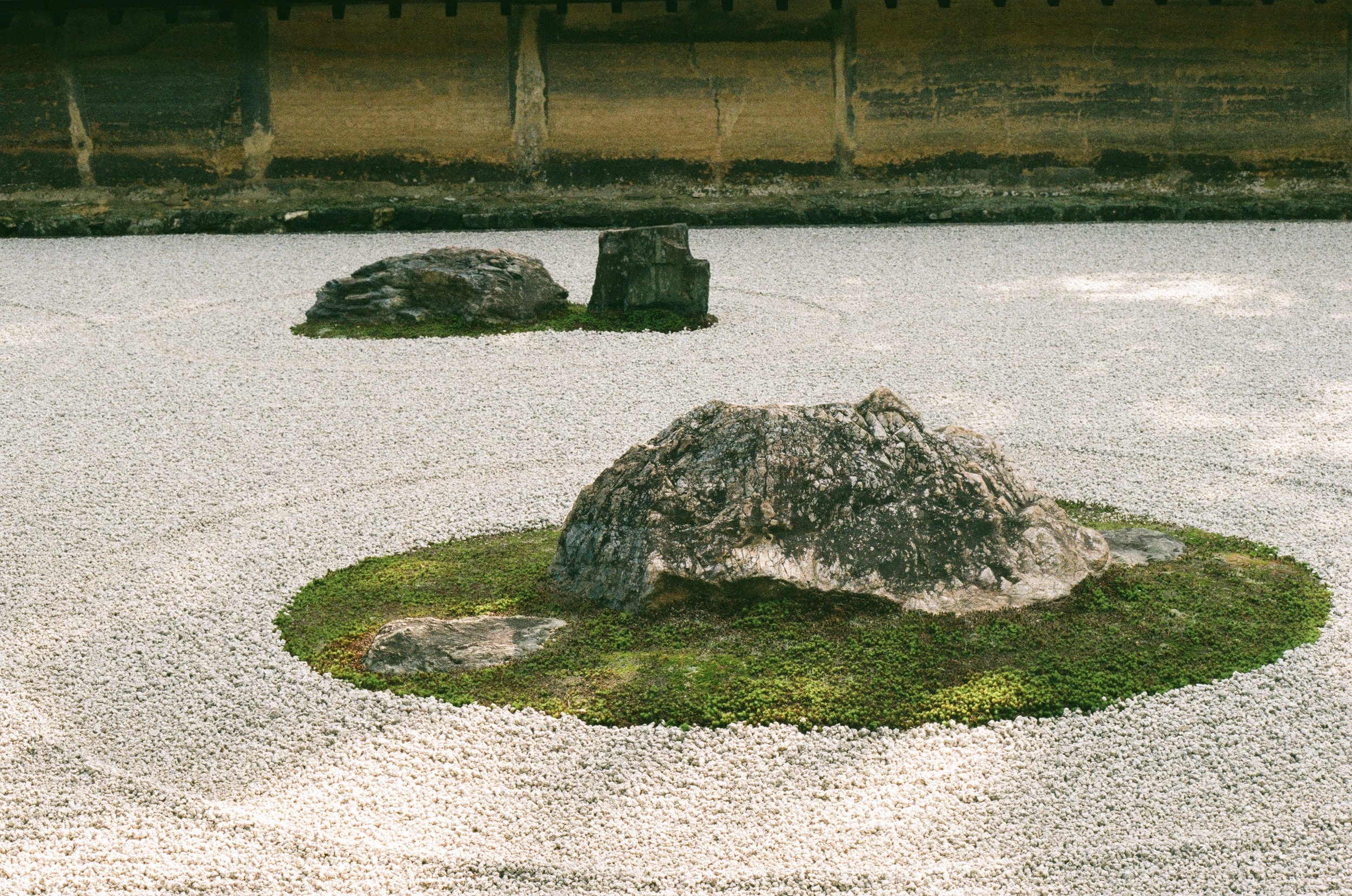
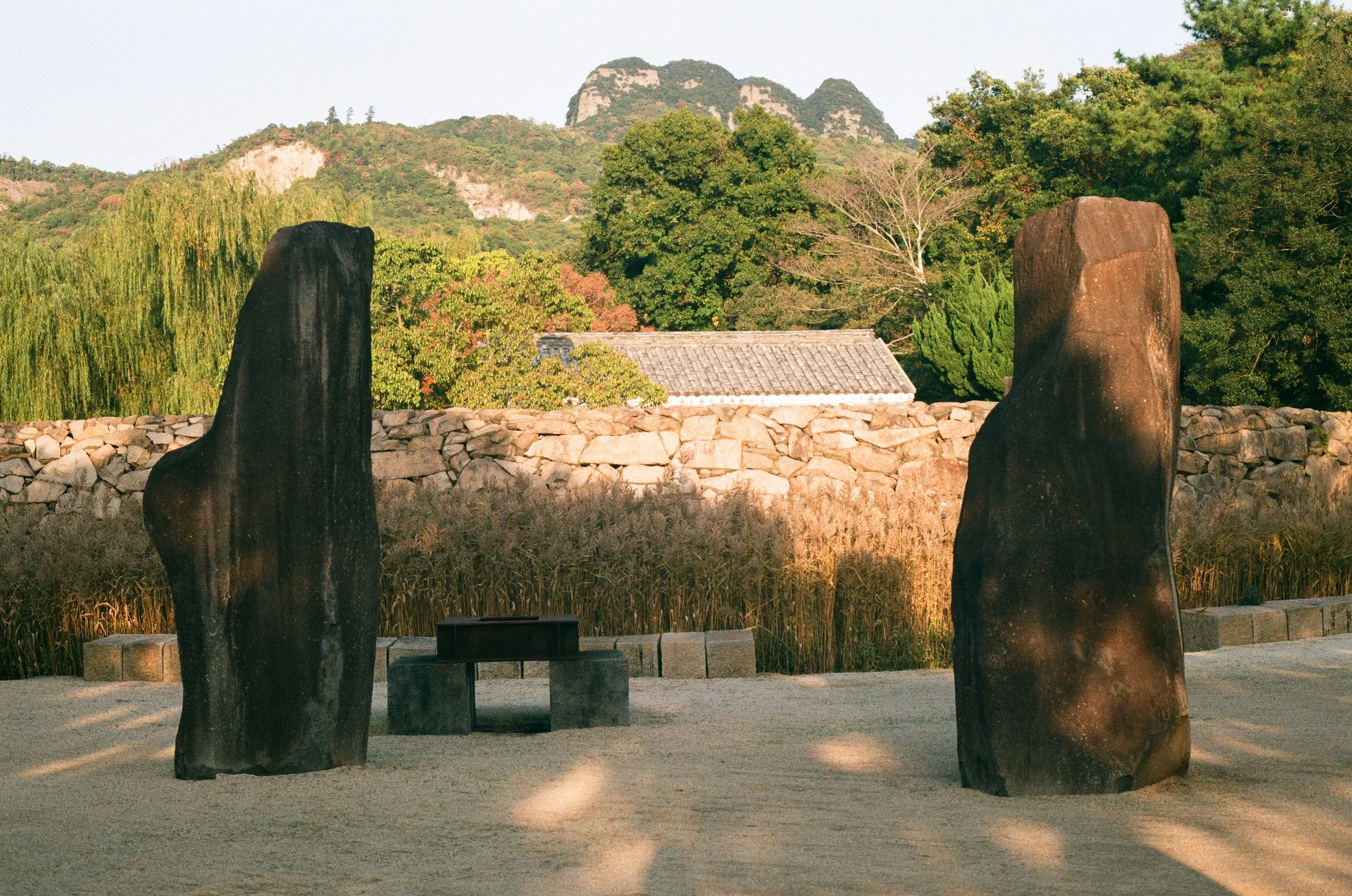
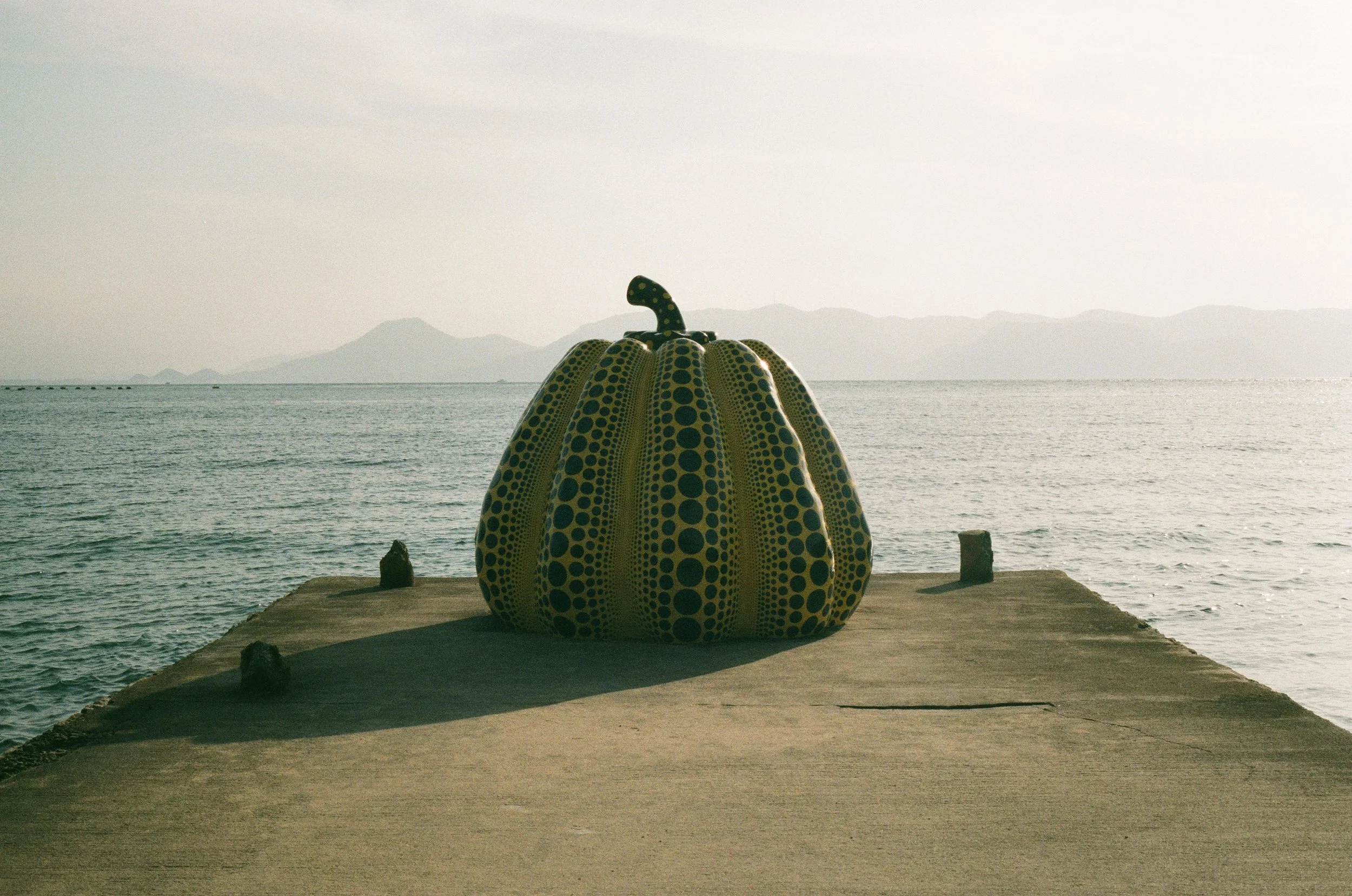
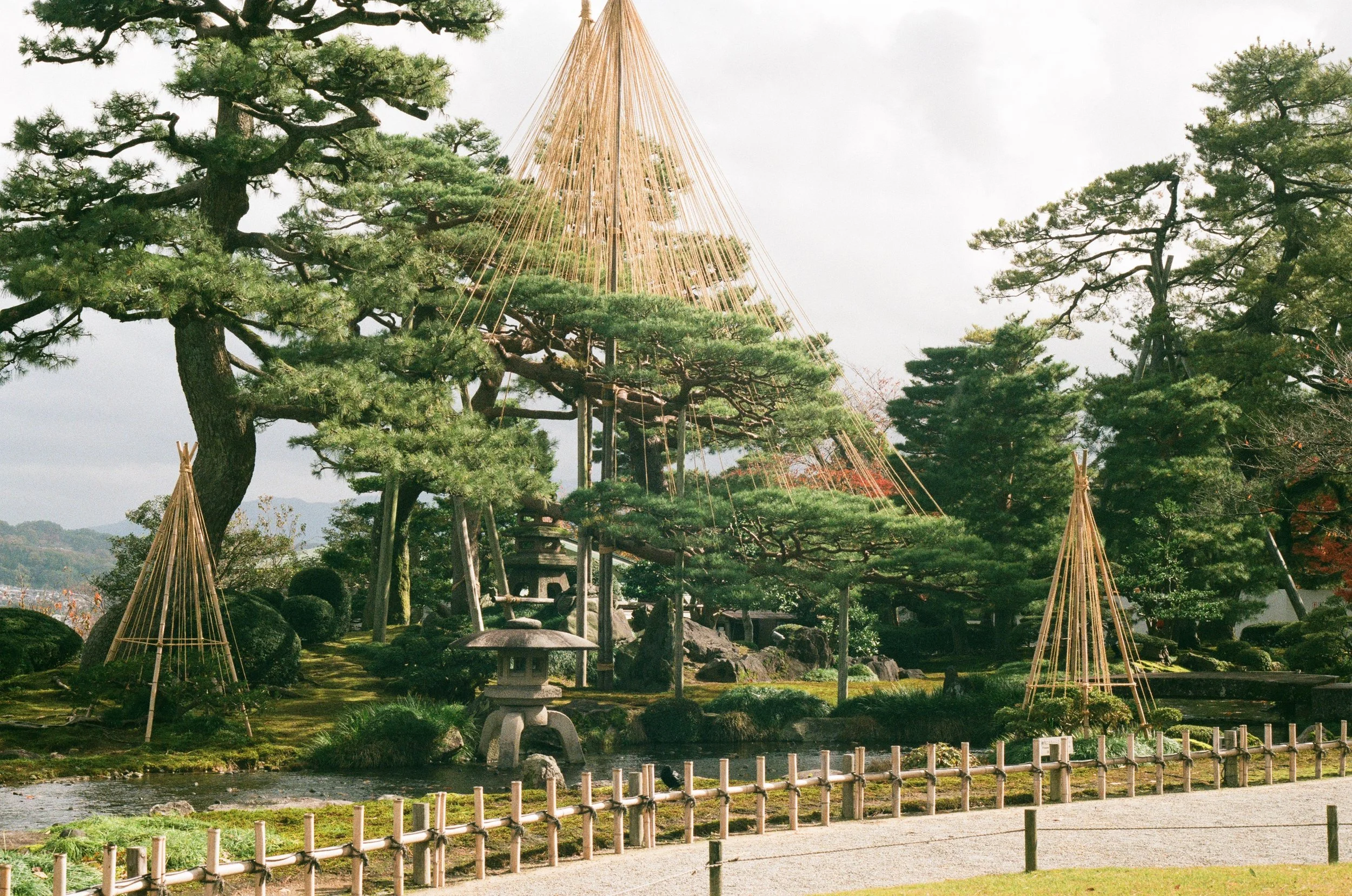
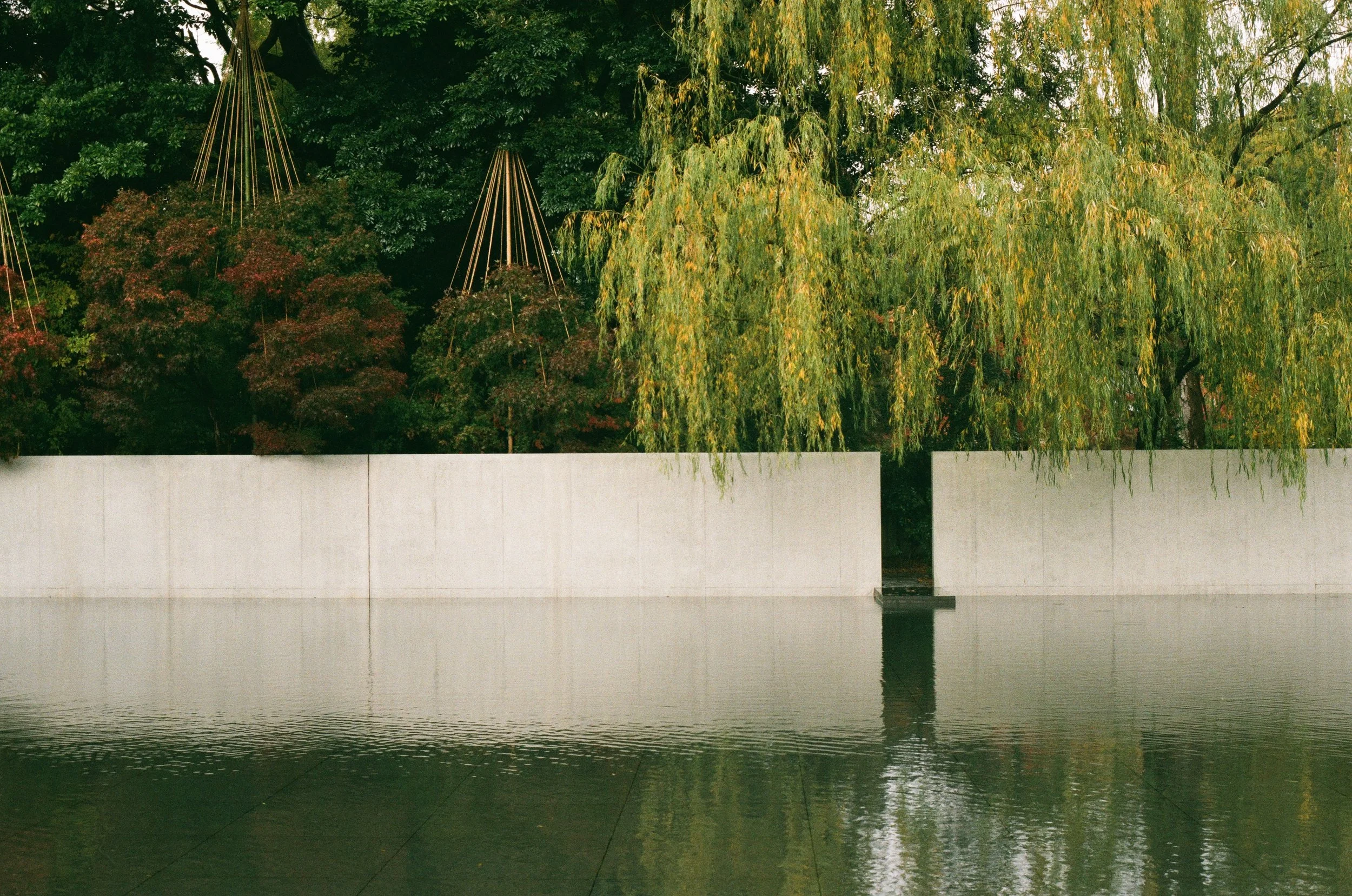
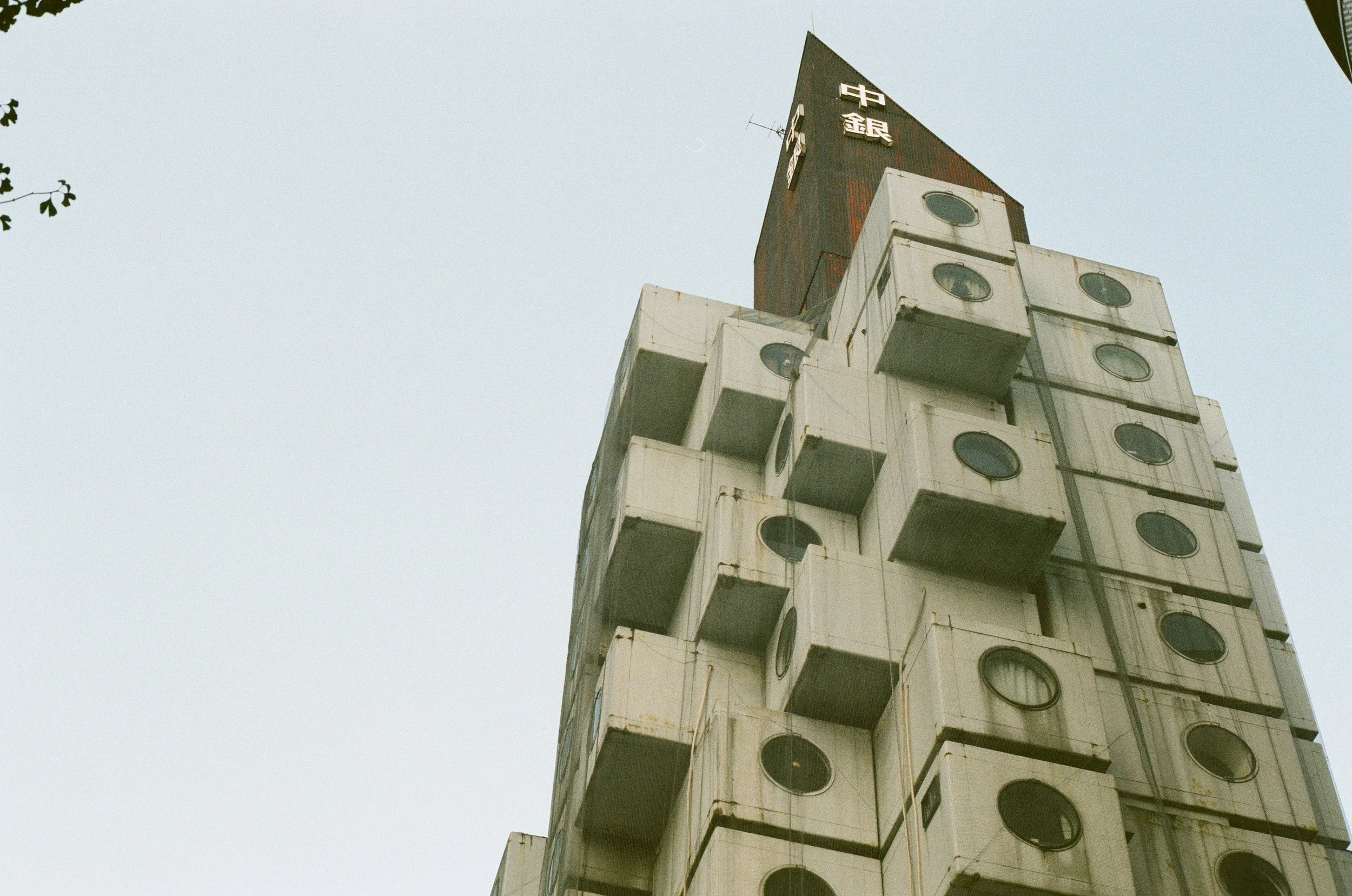
In 2019, as a Yorkshire Sculpture International Associate Artist bursary recipient, I had the opportunity to explore ideas, materials, and spaces both in the UK and abroad. The bursary supported a research trip to Japan, where I traveled across the country and visited inspiring sites including Naoshima, a place that shaped the way I think about the relationship between architecture, objects and human experience. I was also paired with Leeds Art Gallery for mentorship, and our cohort of five bursary recipients met monthly while Yorkshire Sculpture International organised workshops with visiting artists. One of these encounters, with Heather Phillipson at S1 Artspace, involved preparing a presentation on the ideas and projects that excite us, which was an energising exercise in reflection and dialogue.
As the festival approached, I was invited by John Lewis in Leeds to create a sculptural installation for their shop window, which remained on display for the duration of the festival. I also collaborated with Jonathan, a glass blower at Lumsdale Glass, learning how materials respond, adapt, and demand attention. Watching molten glass stretch and solidify under skilled hands reinforced the importance of patience and precision, lessons I carried directly into my installation.
Looking back, this period was formative in shaping my approach to artistic practice. It deepened my understanding of material behaviour, the connection between making and perception, and the ways carefully considered objects can influence how people inhabit and interpret a space. Whether through a crafted glass form or a sculptural window display, I began to see art as both object and process, an invitation for viewers to engage with their surroundings in new ways.
The John Lewis shop window became more than a site for display. It was a stage charged with domestic aspiration and the subtle choreography of everyday life. With Support Structures, I explored how familiar household forms such as lampshades of sculpted glass, angled clothes rails, and stacked boxes can occupy space without functioning conventionally. The objects were recognisable yet removed from consumption, acting instead as prompts for imagination.
Working in this context allowed me to examine the boundary between bespoke craft and mass produced prototypes. Each object in the window was the result of careful making, adjusted and reconfigured over time. Traces of the process remained in wood offcuts, folded drapes of unused material, and subtle irregularities, reminders that these works were not reproductions but artefacts shaped piece by piece.
This approach was informed by my time with Jonathan at Lumsdale Glass. Observing the negotiation between material, form, and control strengthened my understanding of how materials carry both constraints and potential. Translating that awareness to the shop window, I began to see the display as an extension of the workshop, a space where material, form, and perception converge, inviting viewers to consider how design and objects influence the way they experience daily life.
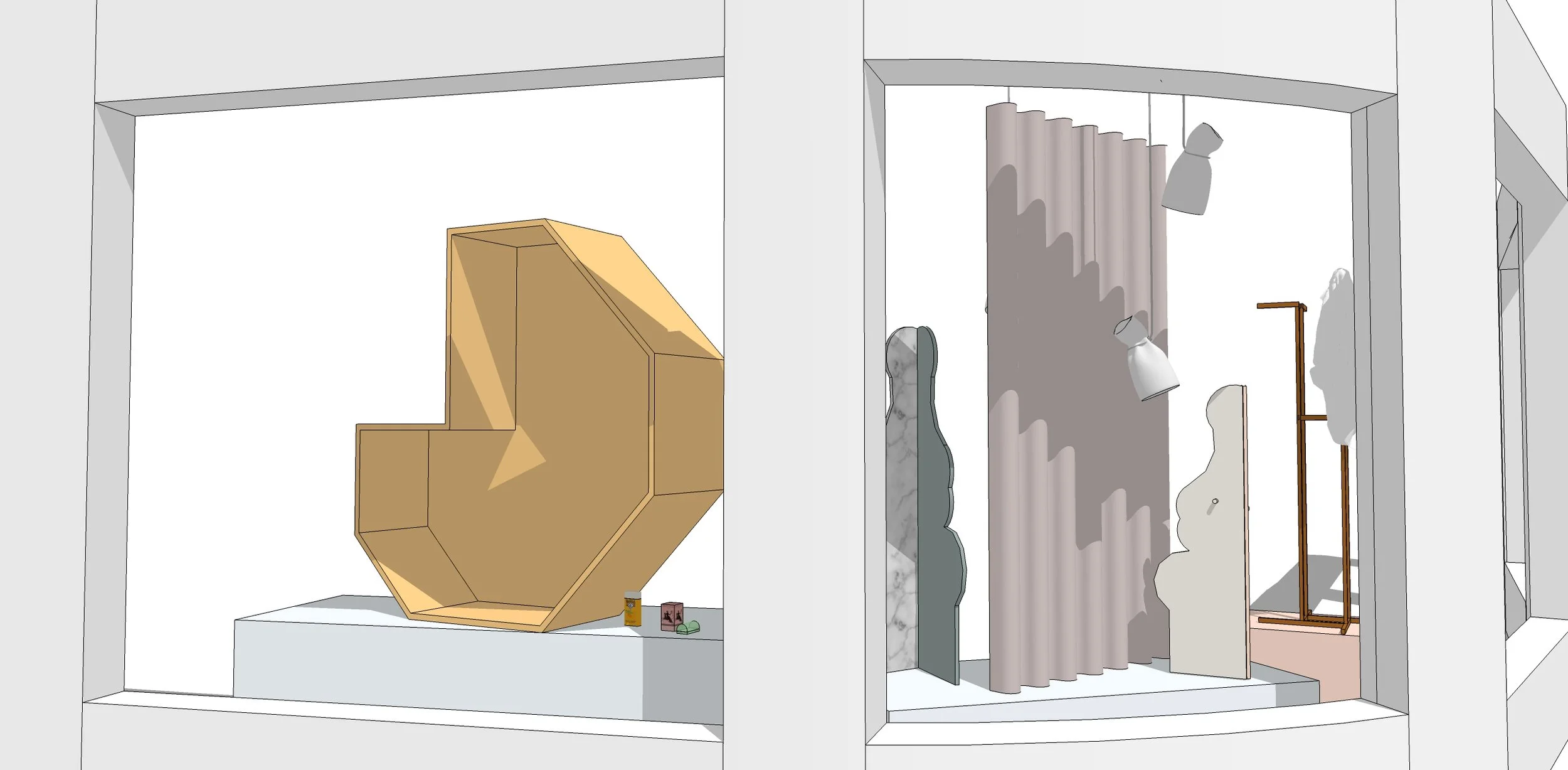
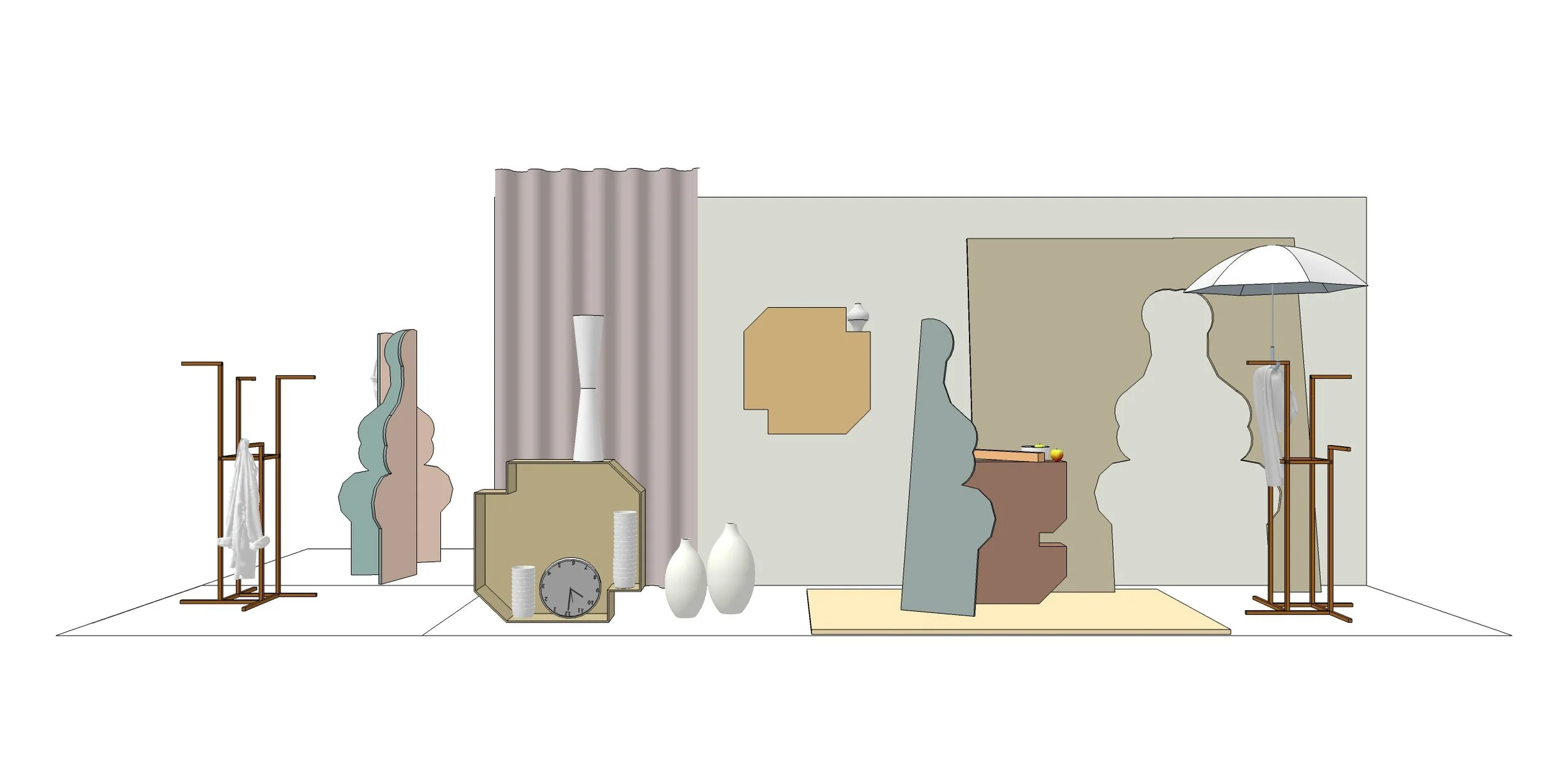
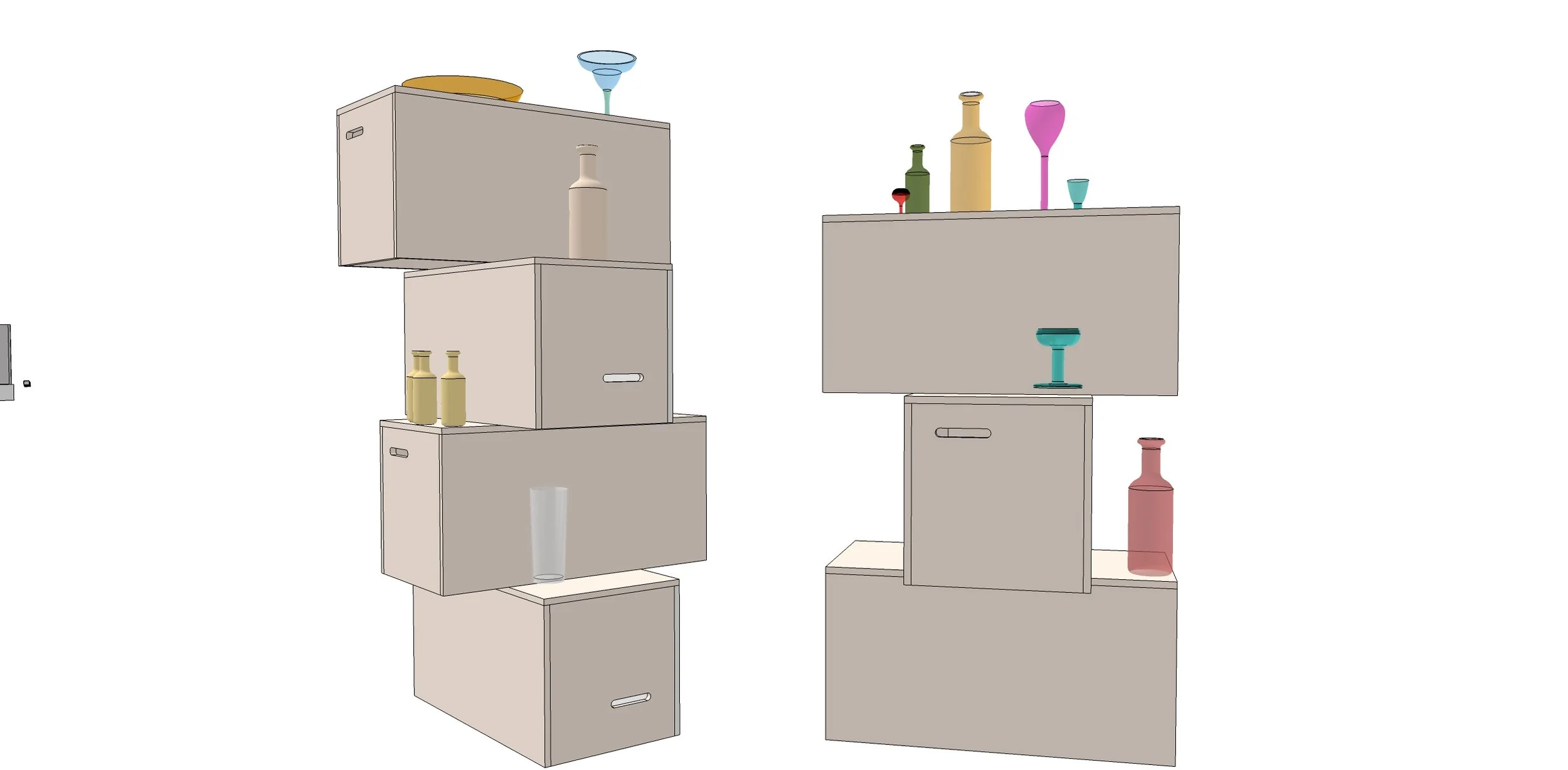
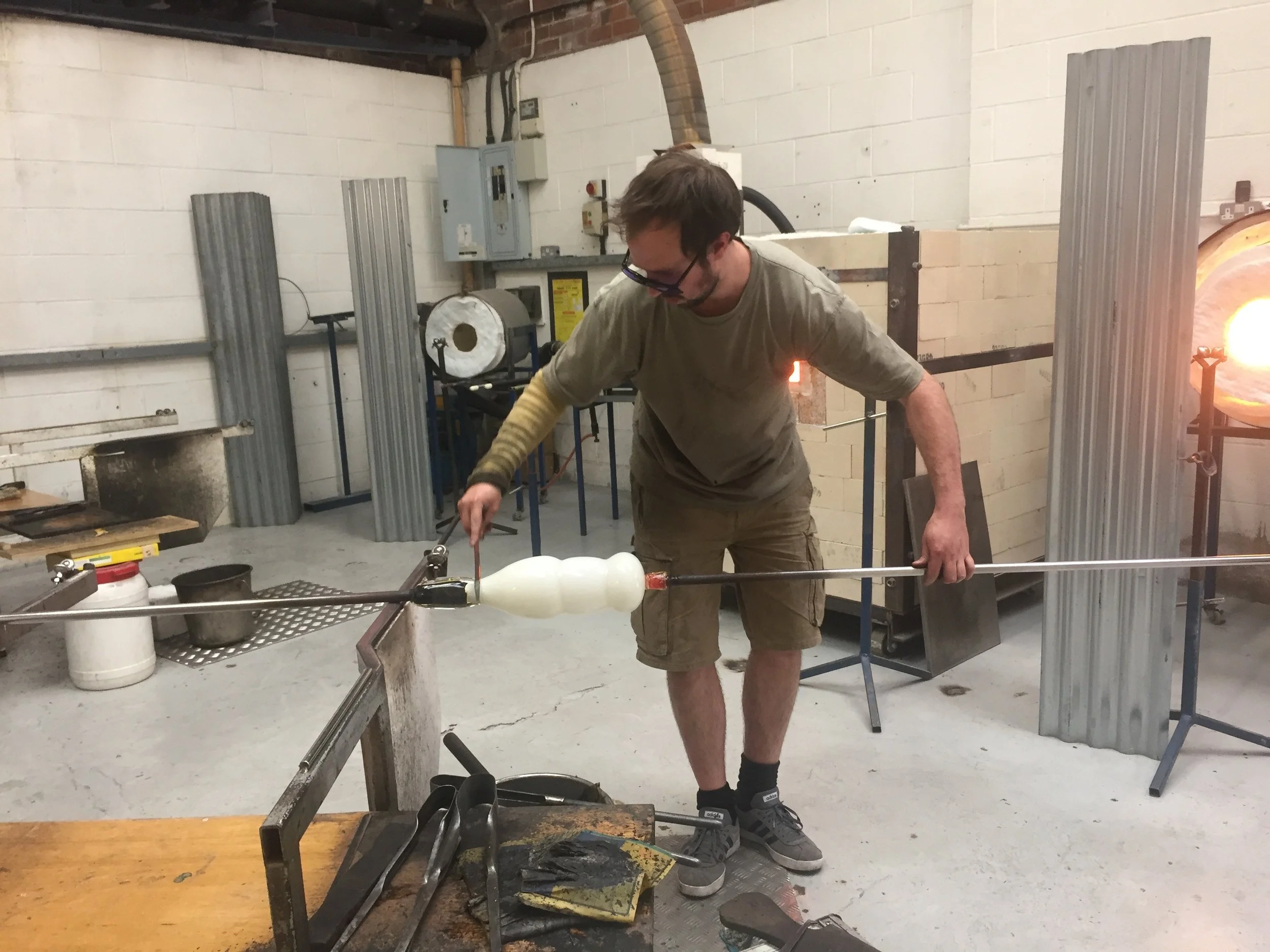
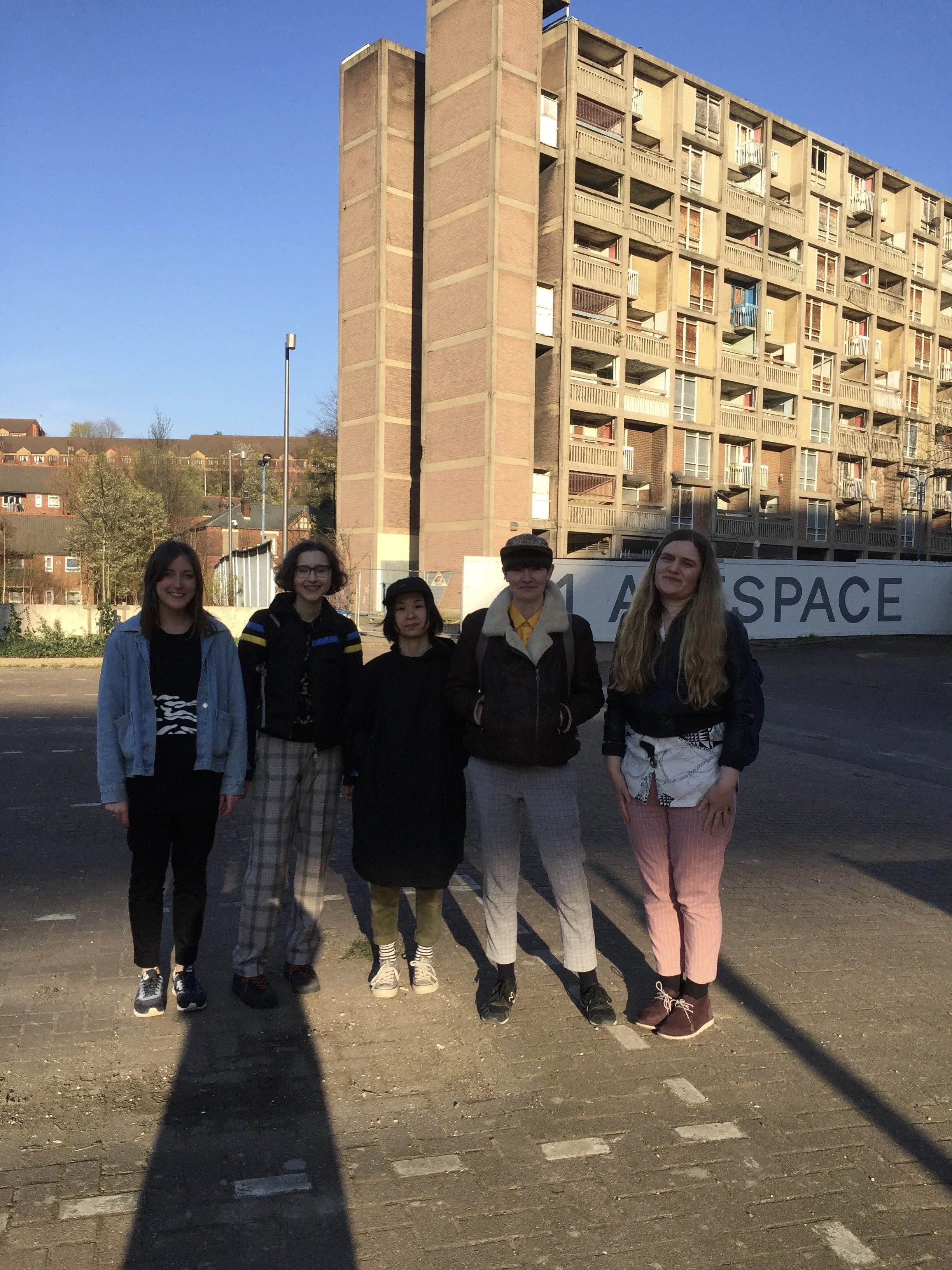
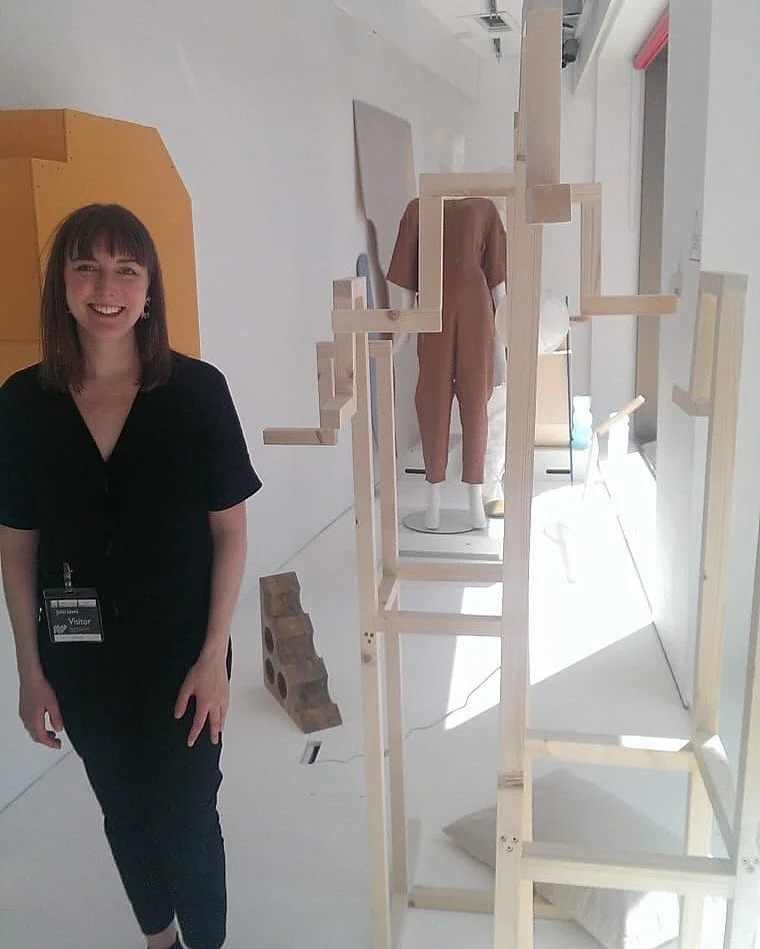
Photographs include: preparatory drawings for Support Structures and its installation; Jonathan at Lumsdale Glass; Finnemore’s print installed at Leeds Art Gallery; Associate Artists visiting S1 Artspace and a research trip to Japan.